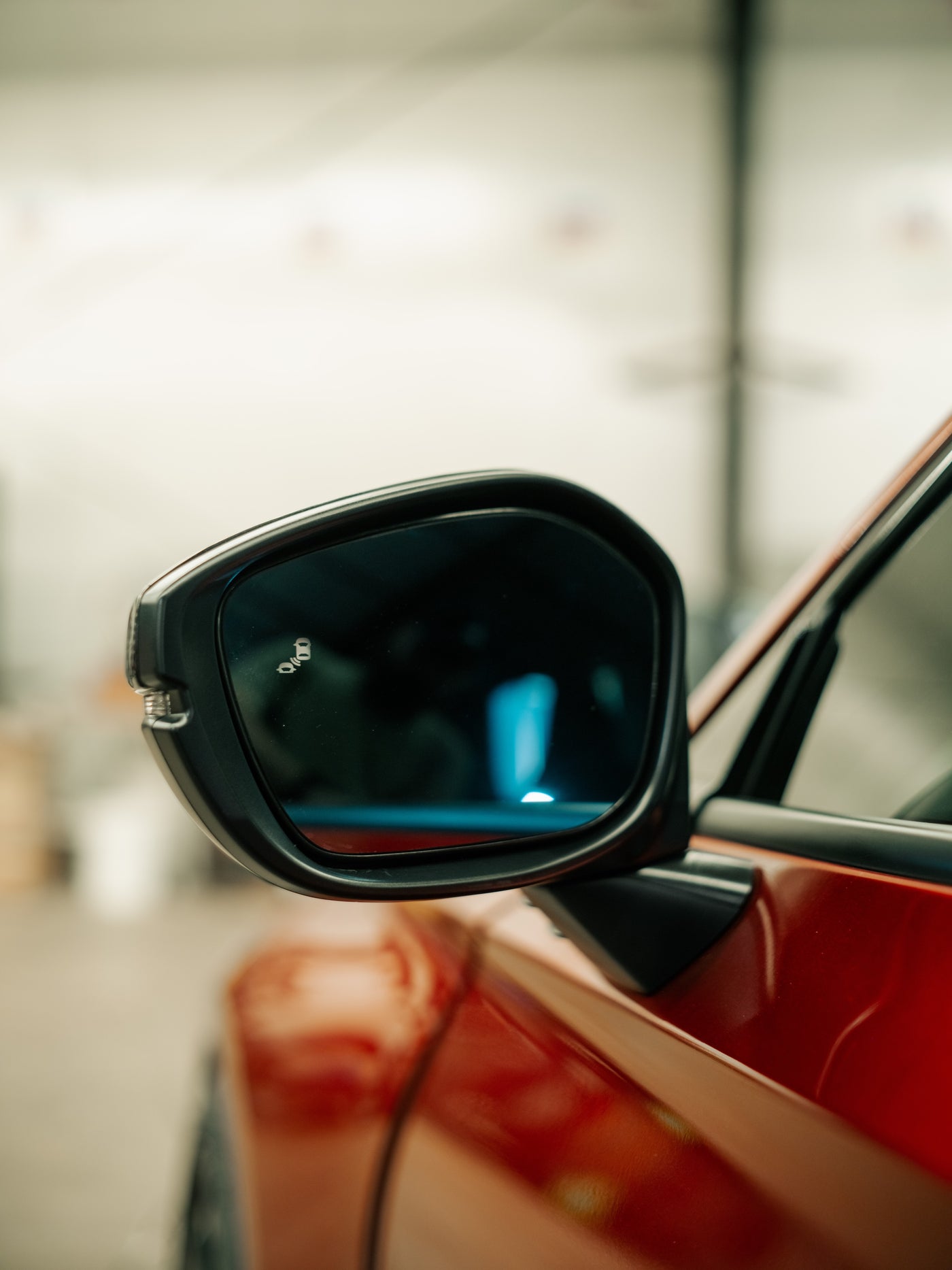
What if there was a wide-angle glass that drops into your factory housing? What if that glass gave a wider view down the side of the car, and headlights behind you at night stopped causing the harsh eye strain?
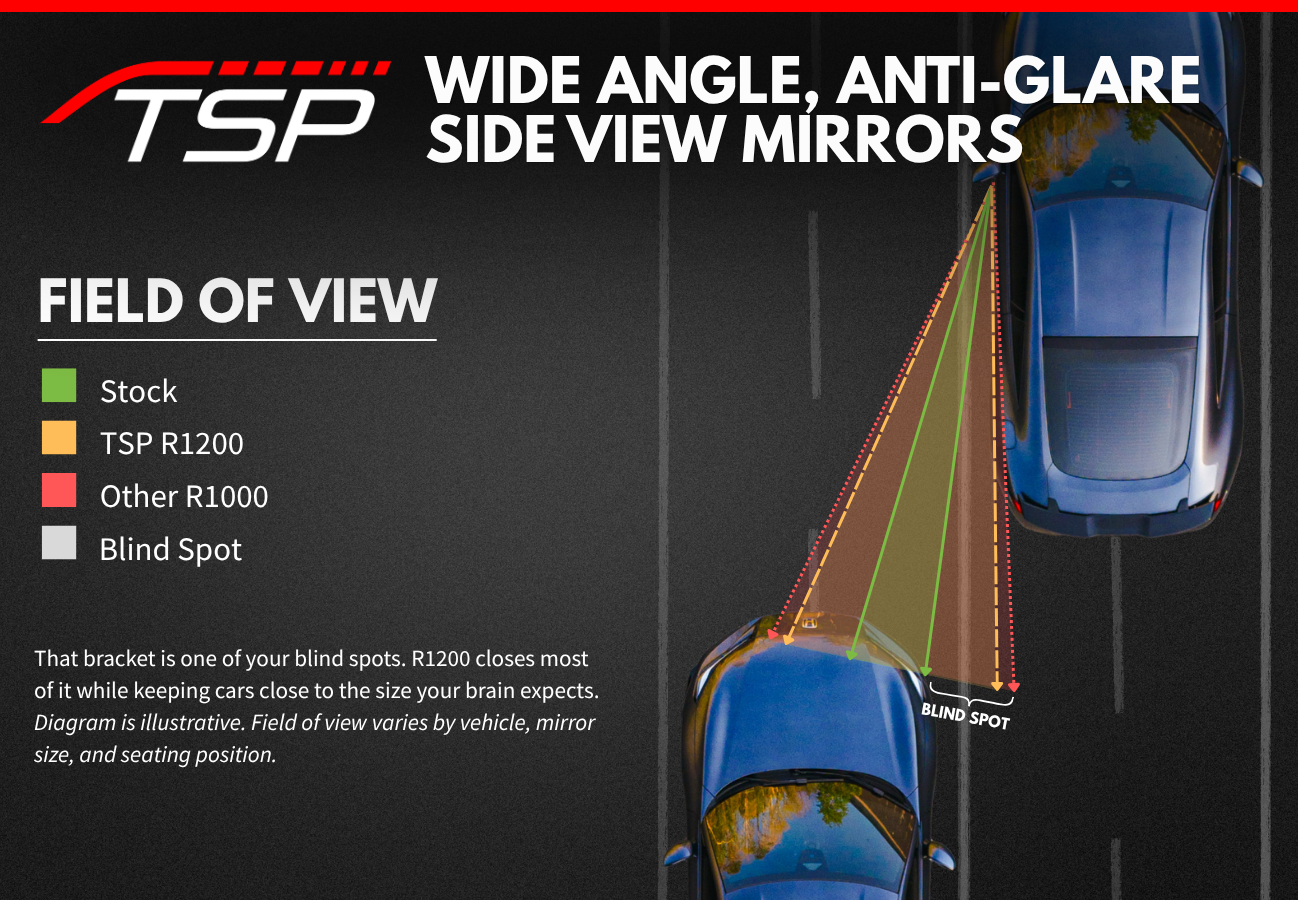
Unlike the Earth, the factory driver-side mirror is flat. Flat glass shows you only a narrow slice of an area, which leaves a gap between where the mirror stops and where your peripheral vision picks up. That gap is the blind spot, and shoulder-checking or cheap stick-on accessories is how most people work with it.
The second problem usually shows up after dark. For example, a truck behind you with LEDs in reflector housings puts a lot of light into a flat, highly reflective mirror, and it goes straight into your eye at full strength. Cue that painful, blinding sensation.
Convex curvature fixes the first problem, and a wavelength-selective tint fixes the second. Both are well-understood, and both are worth understanding before you buy.
The science · Part one
Why curving the glass widens the view.
A flat mirror reflects one angle in for one angle out. The “slice” of the area you get is set by the size of the glass and where your head is. Curve the surface outward and every point on it faces a slightly different direction. The same piece of glass now gathers light from a much wider cone and compresses it into the same frame. More area, same window.
That sounds great and all, but there is a cost or tradeoff to introducing a curve to that flat piece of glass. The cost is fixed by physics: everything in that wider cone must get smaller to fit. Smaller reads as farther away. That is the entire reason the “OBJECTS ARE CLOSER THAN THEY APPEAR” warning exists.
Regulations
US federal standard FMVSS 111 allows a convex radius between 889mm (35") and 1651mm (65")
Tighter radius, wider view, more minification
NHTSA rejected a proposed 25" radius, finding it could distort and hurt a driver’s read on closing speed
So the useful range is narrow, and it’s a genuine engineering tradeoff rather than a marketing number
Where we landed
R1200.
The curve, or radius, is the number that decides everything else, and it gets quoted as an R value. A lower number means a tighter curve and a wider view, but a smaller image. Our glass is R1200, which sits about 40% of the way along the legal range.
FLATFactory driver-side glassInfinite radius. True 1:1, no distortion at all, and the narrowest view of the three. This is the blind spot you already have.
1200TSP wide angleRoughly two and a half times the field of view of flat glass, while a car 20m back still appears about 12% larger than it would in R1000 glass. Easier to judge closing speed.
1000Tighter aftermarket glassAround 12% more field of view than R1200, and everything in it looks correspondingly smaller and farther away.
All versions are practical and have pros and cons. R1000 buys you the widest view available and asks more of your distance judgment in return. R1200 gives up some of that width to keep cars closer to the size your brain expects. Flat glass requires little to no mental recalibration and is true to size, but keeps the existing blind spot.
We went with the middle. A daily-driven car spends most of its life in traffic where reading closing speed matters more than seeing the last few degrees of the next lane, and the recalibration period is shorter when the image is less compressed.
Give yourself a few days of ordinary driving before you trust a convex mirror for a fast lane change. Your brain calibrates distance from apparent size, and it needs to relearn the scale. Everyone goes through this, and then it becomes automatic.
The science · Part two
Blue glass isn’t just darker glass.
The obvious way to cut glare is to make the mirror dimmer across the board. That works, and it's what a chrome mirror does. It also makes everything darker, which is the wrong trade at night and worse again if your windows are tinted.
A blue tint is more selective than that. The color is in the glass itself, so light from behind you passes through the tint, reflects off the mirror backing, and passes through it again on the way to your eye. Two passes, which is why a tint this light has such a significant effect.
It works on two mechanisms at once.
01It targets the wrong end of the spectrum.Halogen headlights put most of their energy into longer wavelengths. A blue tint absorbs proportionally more of that and passes the shorter wavelengths, so the glare drops without the whole image going dark.
02It exploits how your eyes change at night.What comes back off a blue mirror is weighted toward the shorter wavelengths. Your eye is most sensitive around 555nm in daylight, but that shifts down toward roughly 505nm once you’re dark-adapted - a well-documented effect called the “Purkinje shift”.
That second one is the useful part. In daylight your sensitivity sits well above where a blue tint is passing the most light, so bright reflections read dimmer and sun glare drops. After dark, your sensitivity moves down toward that range, so the image holds up better than a uniformly darkened mirror would.
To put it simply, it dims the light you don’t want and keeps the light you do. That’s why it beats “just making the glass darker.”
The science · Part three
Why blue, and not gold or chrome.
Mirror glass comes in a few flavors and they are not interchangeable. Each one is a different answer to the same question: which light do you give up?
Silver / aluminumHighest reflectivity, brightest image and the most glare. This is your factory glass.
ChromeLower reflectivity across the board - less glare, but darker everywhere. Rough at night, especially behind tint.
GoldCuts blue, protects long wavelengths - the opposite tradeoff. Built for different conditions.
BlueSelective, matched to night vision, cuts headlight glare, keeps the image readable after dark.
Ours is a tint rather than a surface coating. The color lives in the glass, not on it, which means it can’t scratch off, wear through or peel at the edges the way a film can. It also means the effect is consistent across the whole surface for the life of the glass.
Halogen output climbs to the right. The tint falls off to the right. Your dark-adapted eye peaks at 506nm, where the tint is still passing light freely.
Which is also the answer to how dark is it? Probably lighter than you are picturing. You notice the color looking directly at the glass, not while you’re driving.
Tint has a legal floor
FMVSS 111 requires any mirror to average at least 35% reflectance, measured to SAE J964
Factory glass typically runs around 95%
A tint dark enough to be a problem would fail that test
That floor is the reason blue mirror glass is lighter than people expect. There is a limit to how much light you are allowed to take away, and it exists because taking away too much is genuinely unsafe. Anti-glare must work inside that, which is exactly why being selective about wavelength beats simply going darker.
Fitment
Available variants by platform.
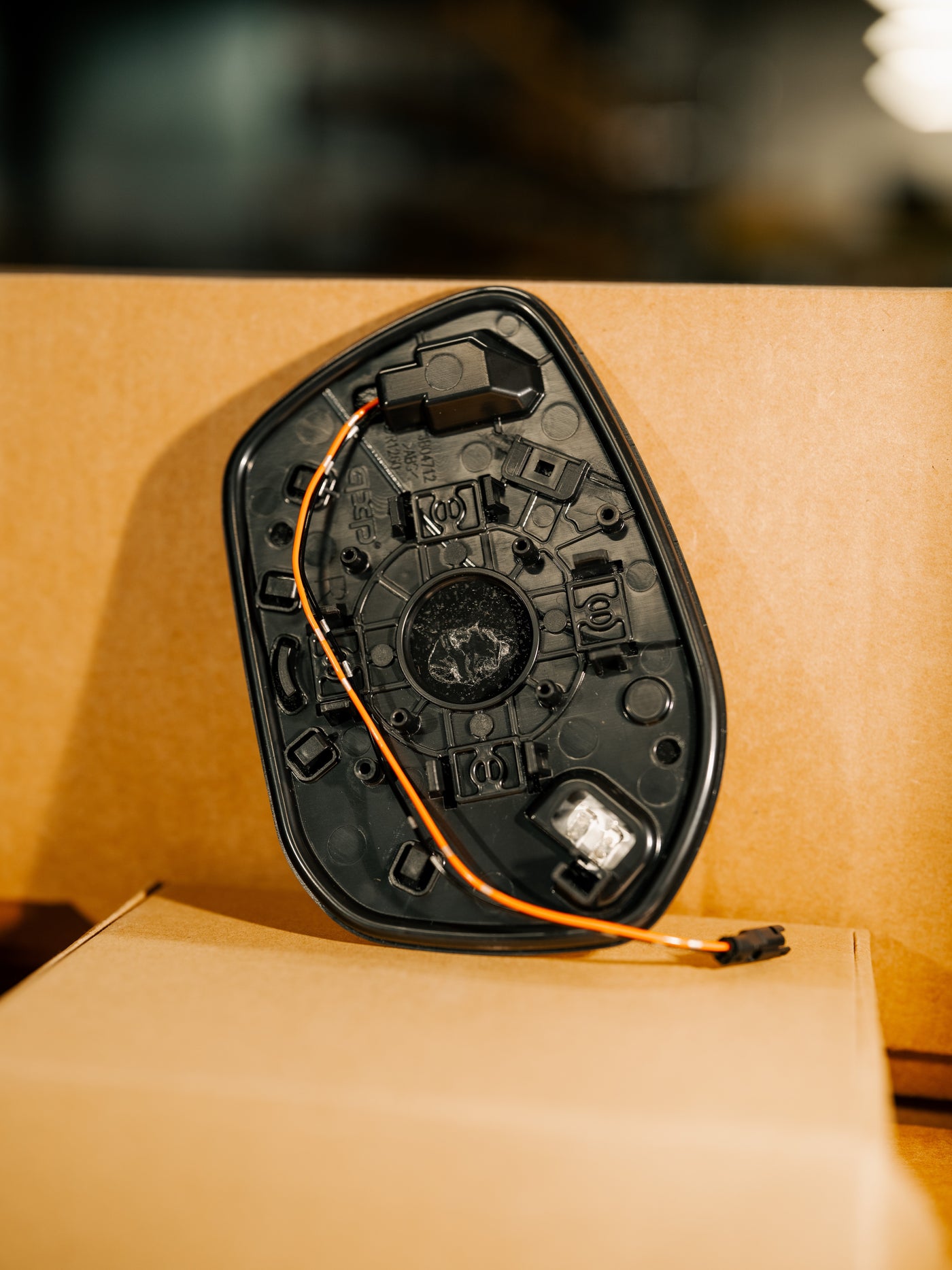
This is replacement glass, not a whole mirror assembly and not a stick-on lens. Your factory glass unclips and this clips into the same place. On heated variants it plugs into your existing factory connectors.
The full trim-by-trim table lives on the product page. If you are between two options, message us with your year and trim before you order rather than after.
Keeping your features
Nothing stops working.
The heating element and the blind spot indicator both live behind the glass, not in it. Swapping the glass doesn't touch either one.
On heated variants the defrost plugs into the same factory connector and behaves exactly as it did. On the BSM variant, the indicator shines through the new glass the same way it shone through the old one.
We know because they're on our own cars. Our shop FL5 Type R, a Prelude and an Accord are all running the Heated + BSM variant, with heat and indicator confirmed working through the new glass.
Specifications
TypeReplacement glass, clip-in
OpticsConvex wide-angle
GlassBlue anti-glare tint
VariantsStandard / Heated / Heated + BSM
WiringReuses factory connectors
Warranty1 year
Sold as
Driver & Passenger Sides (Pair)
Clips into the factory housing
No adhesive, no cutting, no wiring
Because it's glass rather than a full assembly, you keep your factory housing, your paint match and your power adjustment. The only thing that changes is what you see in it.
Before you buy
How hard is this install?
1 of 5
The easiest thing on this website. The factory glass unclips from the housing and the new glass clips into the same place. On heated variants, unplug two connectors and plug them back in.
No tools required for most people, no adhesive, nothing to cut. Do it in a parking lot in ten minutes.
Objects really are closer than they appear?
Yes, and that's not a disclaimer, it's the physics. Convex glass compresses a wider view into the same frame, so everything in it looks smaller and therefore farther away. It's the price of the extra field of view and there's no way around it.
Give yourself a few days of normal driving to recalibrate before you trust it for a quick lane change.
How dark is the blue tint?
Lighter than you’re picturing. It’s a tint in the glass, not a smoked lens and not a film on the surface. You notice the color when you look directly at the glass and not really when you’re driving. It’s also wavelength-selective rather than uniformly dark, which is the whole point.
Will my defroster still work?
Yes, on the heated variants. The element sits behind the glass and plugs into the factory connector. It works exactly as it did.
Will my blind spot light still work?
Yes, on the Heated + BSM variant. The indicator is behind the glass and shines through the new glass the same as the old one. Confirmed on our own cars.
What if I order the wrong variant?
Message us before you install it and we'll sort it out. Once it's installed we can't take it back, so check your trim against the table on the product page first.
What does the warranty cover?
One year from purchase. If something goes wrong inside that window, message us with your order number and a photo and we'll take it from there.
After they're in
Show us your car.
Once yours are clipped in, tag us. We pull customer cars for our social feeds regularly, and the good ones end up on this page.
Night shots especially. Glare reduction is hard to photograph and easy to experience, so if you catch a good before-and-after, we would like to see it.
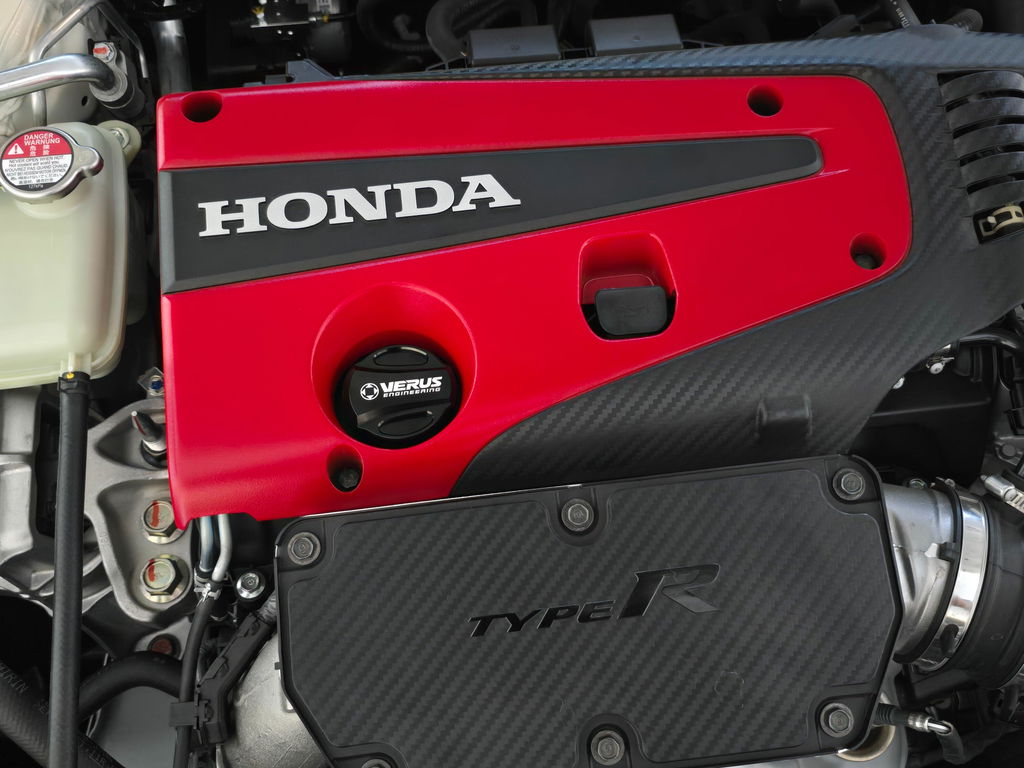
Never bought an aftermarket oil cap for my vehicle before but was looking for a cleaner look. Didn't realize you'd have to assemble a oil cap when I got it but the company made a nice video on YouTube for my type r. Really like the style and how it sits. Its nice quality and has good leverage for removing.
Once I figured out the orientation, it went on easy with all of the springs. Fitment was great and looks awesome. Defenitely reccoemnd. Temps are noticeably cooler.